How Do Sceye's Stratospheric Airships Monitor Greenhouse Gases
1. The Monitoring Gap Is Much Bigger than a lot of people think.
Climate change emissions around the globe are monitored through a series of ground stations as well as occasional spacecraft campaigns, as well satellites operating hundreds of kilometers over the ocean surface. Each has their own set of limitations. Ground stations are scarce and geographically biased toward rich countries. Aircraft travel is costly they are also short-duration and limiting in their coverage. Satellites offer global reach but struggle with the spatial resolution needed to determine specific emissions sources- pipes that leak, landfill that releases methane, or an industrial facility that does not report its output. The result is a monitoring system with serious inconsistencies at the extent where accountability and control really matter. Stratospheric platforms are increasingly being considered as the unfinished middle layer.
2. A higher altitude can provide a better monitoring benefit Satellites Don't Have the Ability to Replicate
There's a reason in geometry the reason why 20 kilometers beats 500 kilometers in emissions monitoring. A sensor operating from stratospheric elevation could be able to observe a footprint of several hundred kilometers while being close enough recognize emission sources with meaningful resolution — individual facilities or road corridors. It can also distinguish agricultural zones, and so on. Satellites monitoring the same area from low Earth orbit cover it more quickly but with fewer granularity and revisit times. A methane gas plume that emerges and fades away in a matter of hours won't be captured at all. A device that stays over an area of interest for weeks or days at a time, transforms intermittent snapshots into continuous surveillance.
3. Methane is the top priority for a valid reason
Carbon dioxide draws the bulk of the spotlight however methane is the greenhouse gas in which immediate improvements to monitoring can make the most impact. Methane has a higher toxicity than CO2 when measured over a period of 20 years and a large portion of methane emission from human activities comes from a few sources — pipelines and oil infrastructure or waste facilities, agriculture operations — which can be detected and, in most cases, fixable when identified. Monitoring methane in real-time from an indefinite stratospheric platform is a way for operators, regulators, and authorities can detect leaks before they occur rather than identifying them later, through annual inventory reconciliations that are often based on estimates, not measurements.
4. Sceye's Airship Design is Affitting to the Monitoring Mission
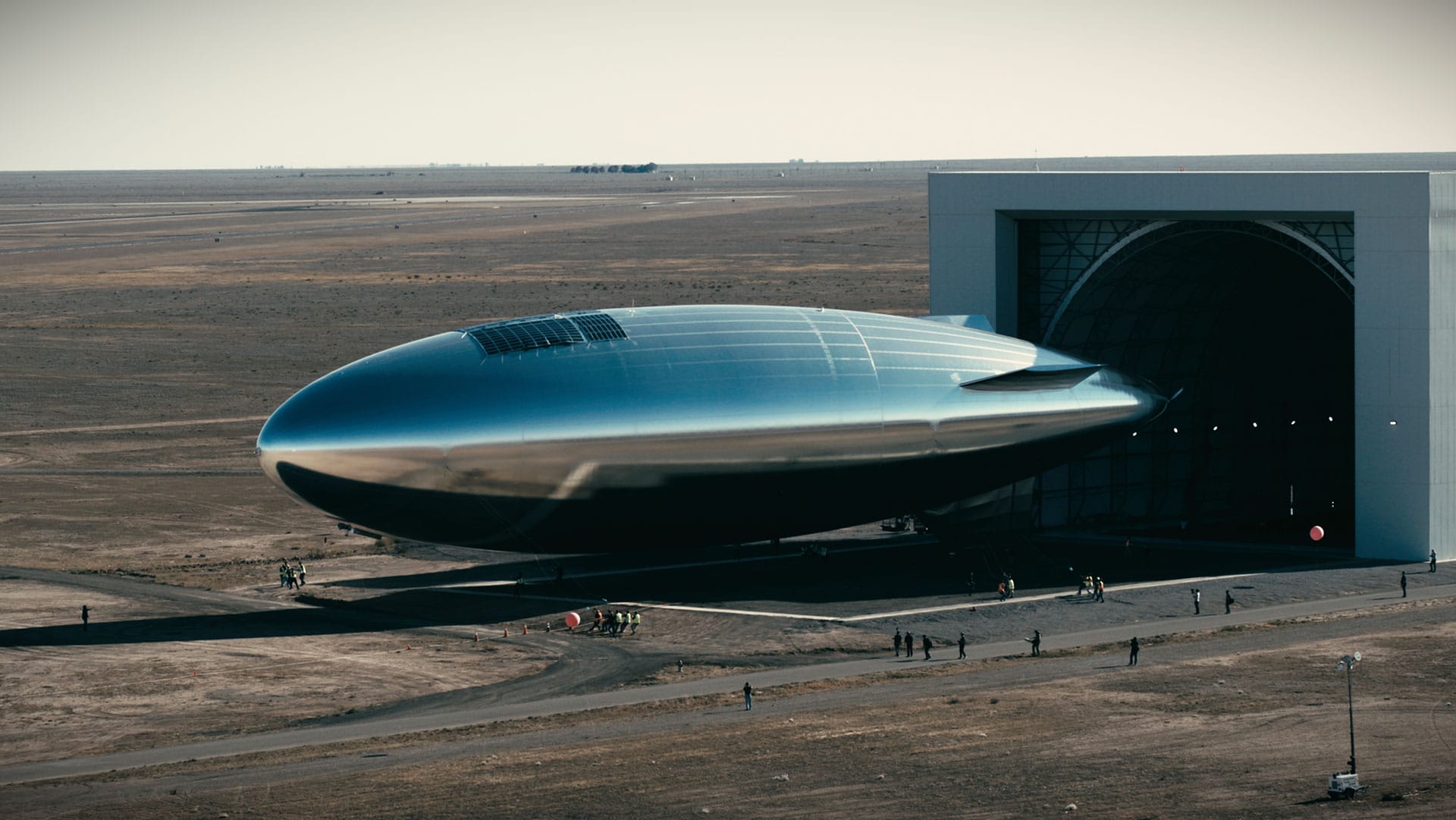
What makes an effective telecommunications platform and an environmental monitoring system overlap more than you think. Both require endurance for a long time along with steady positioning and important payload capacities. Sceye's lighter than air airship model is able to meet all three requirements. Since buoyancy is responsible for the primary requirement of staying up this means that the system's energy bill isn't consumed by generating lift as it is utilized for propulsion, station keeping and powering the sensor suits the mission. For monitoring of greenhouse gases in particular that means carrying imaging systems, spectrometers, and other data processing hardware, without the brutal weight constraints that restrict fixed-wing HAPS designs.
5. Station Keeping Is Non-Negotiable for valuable environmental information
Monitoring platforms that drift can produce data that's hard to comprehend. Knowing precisely where a sensor was at the time of recording a reading is essential to attribute the source of the reading. Sceye's focus on real station keeping — which is holding one's position in relation to a desired area by active propulsion and active propulsion — isn't merely an important performance indicator for technical reasons. It's why the data is scientifically sound. Stratospheric Earth observation only becomes effective for regulatory or legal reasons when the positional record is solid enough to stand up to scrutiny. Drifting balloon platforms no matter how skilled their sensors are, cannot provide this.
6. The same platform is able to monitor Oil Pollution and Wildfire Risques Similarly
One of the most intriguing features of the multi-payload model is the way that different environmental monitoring tasks complement each other within in the same automobile. Airships that operate over zones of offshore or coastal waters can contain sensors geared towards oil pollution detection, in addition to those monitoring CO2 or methane. Over land, the exact platform architecture can be used to detect wildfires technology, which detects heat signatures, smoke plumes and stress indicators of vegetation which can precede ignition incidents. Sceye's design approach to mission development recognizes these as not distinct applications that require separate aircrafts, rather as parallel use cases with infrastructure that's in place and operational.
7. Detecting Climate Disasters at a Real-Time Rate the Response Equation
There's a significant difference between being aware that a wildfire started 6 hours ago versus knowing it started a mere twenty minutes ago. Similar is true for industrial accidents releasing toxic gases, flooding events with a potential to damage infrastructure, as well as sudden methane releases from permafrost. The ability to identify climate disasters and their causes in real time using a constant stratospheric satellite gives emergency personnel, government agencies, and industrialists a window of opportunity to act that does not be present when monitoring relies on routine satellite or ground-based reports. The value of that window is enhanced when you consider how the early stages of most environmental emergencies are crucial to intervene in when intervention is the most effective.
8. This Energy Architecture Makes Long Endurance Monitoring a Viable
Environmental monitoring missions can only provide their greatest value if the platforms remain on station longer enough to accumulate an accurate data record. The methane level for a week in an oil field will tell you something. Months of continuous data tells the user something that can be implemented. Being able to maintain that endurance will require solving the problem of night-time energy — the platform must provide enough power during daylight hours to sustain all devices throughout the night, without affecting the position or the operation of sensors. Technology advancements in lithium-sulfur batteries with energy densities as high as 425 Wh/kg. These, in conjunction with increasing solar cell efficiency create a closed power loop practicable. For those who do not have both features, endurance is more of an aspiration than being a standard.
9. Mikkel Vestergaard's Personal Background explains the emphasis on the environment
It's important to comprehend why a stratospheric aerospace company places such obvious emphasis on greenhouse gas monitoring and disaster prevention rather than focusing on the revenue generated by connectivity. Mikkel Vestergaard's record of applying technology to huge-scale environmental and humanitarian problems provides Sceye its foundational philosophy, which shapes which missions the company focuses on and how it explains its platform's mission. The capabilities for monitoring the environment can't be a sub-par payload to be bolted onto the appearance of a vehicle that's telecoms responsibly socially. Instead, they have a deep conviction that the stratospheric network should be engaged in climate action, and it is possible for the same platform to handle both without compromising.
10. The Data Pipeline Is as Important as the Sensor
Monitoring greenhouse gas levels from the stratosphere is just half the matter. getting the data to people who require it, in a format that they can decide on, and in a format that is as close to real time is the other part. A stratospheric system with onboard processing capability and direct downlink to ground stations can reduce the gap between detection and action contrasted to systems that batch data to be later analyzed. For applications that manage natural resources for regulatory compliance monitoring or emergency response, the timeliness that the data is frequently a concern equally as the accuracy. Integrating the data pipeline in the platform's infrastructure from the start, rather than just ignoring it is a key element that sets stratospheric geoobservation as a serious science from other sensor projects that are merely experimental. View the recommended sceye for more tips including sceye new mexico, softbank group satellite communication investments, softbank haps pre-commercial services japan 2026, sceye haps project updates, non-terrestrial infrastructure, sceye new mexico, Stratospheric broadband, softbank sceye partnership, sceye haps status 2025 2026, Sceye Softbank and more.

Wildfire And Disaster Detection From The Stratosphere
1. The Detection Window is the most Effective Thing You Could Extend
Every important disaster has its own moment — sometimes measured in minutes, other times in hours -when early awareness would have changed the outcome. A wildfire that is discovered when it exceeds half a hectare in size is an issue of containment. Similar fires that are discovered when it covers more than fifty hectares is a major crisis. An industrial gas leak that is discovered within the first few minutes can be contained before it becomes a public health emergency. The same issue that is discovered within three hours, triggered by any ground-based report or satellite passing by on its scheduled visit, has already turned into a problem for which there is no solution that is clear. A broader detection window is likely to be the most beneficial benefit that an improved monitoring infrastructure can provide, and continuous stratospheric observations are among those few techniques that can change windows in a meaningful manner, rather than insignificantly.
2. Wildfires are becoming more difficult for the Forest Service to Monitor, despite existing infrastructure
The magnitude and frequency of wildfires over the past few years has outpaced the monitoring infrastructure created to monitor them. Ground-based detection networks — sensors, watchtowers or ranger patrols – contain too little territory and are not fast enough to stop rapid-moving fires at their earliest stages. Aircraft responses are effective, but expensive, weather-dependent, and reactive rather than anticipatory. Satellites fly over a spot on a scheduled basis measured in hours, which implies that a fire that starts or spreads between passes gives no warning whatsoever. The combination of greater fires speedier spread, increased rates of spread triggered durch droughts, and complex terrain creates a monitoring gap that conventional approaches are not able to close structurally.
3. Stratospheric Altitude Provides Persistent Wide-Area Visibility
A platform operating from 20 kilometres or more above the ground can guarantee continuous visibility for a wide area of ground that spans hundreds of kilometers including areas prone to fire, coastlines as well as forest margins and urban interfaces at the same time and without interruption. It is not like an aircraft and doesn't require fuel refills. It doesn't disappear off the horizon when on an annual revisit cycle. For wildfire detection specifically, this continuous wide-area view means the platform is on alert when it starts to ignite, and watching while the first spread occurs, and watching for changes in fire behavior to provide a steady streaming of data, rather than a sequence of snapshots which emergency management personnel must interpolate between.
4. Heating and Multispectral Sensors May Detect Fires Prior to Smoke Seeing
The most effective fire detection technologies doesn't wait to see visible signs of smoke. Infrared thermal sensors detect heat anomalies that suggest ignition before an incident has produced any visible signature and can detect hotspots within dry vegetation, smouldering underground fires in forest canopy and the initial flames' heat signatures as they begin to develop. Multispectral imaging further enhances the capability by detecting changes in plant condition, such as stressing on the moisture browning, drying, or dryingwhich indicate a higher threat of fire in a particular area prior to any ignition incident taking place. The stratospheric platforms that use this sensor set-up provides early warnings of active ignition and a prescriptive insight on where the next ignition is most likely, which is a qualitatively different kind of awareness of the situation than traditional monitoring.
5. Sceye's Multi-Payload Methodology Combines Detection with Communications
One of the major issues of major disaster events is that the infrastructure people depend on for communication including mobile towers power lines, internet connectivity can be among the first elements to be destroyed or flooded. A stratospheric base that has both disaster detection sensors and a telecom payloads will address this problem from one vehicle. Sceye's approach to mission design sees observation and connectivity as mutually beneficial functions, not rival ones. The same platform that senses a fire in progress can also send emergency communication to those at the ground who's terrestrial networks have gone dark. The cell tower in space isn't just a witness to the disaster — it keeps people in touch via it.
6. Alerts for Disasters Go Well Beyond Wildfires
While wildfires make up one the most appealing scenarios that require constant monitoring of stratospheric conditions, similar capabilities are available to a broader array of scenarios for disaster. Flood events can be tracked as they progress across the coastal zones and river systems. Aftershocks from earthquakes — that include impaired infrastructure, blocked roads and populations that have been displacedhave the advantage of rapid wide-area analysis that ground teams can't deliver in time. Industrial accidents releasing harmful gases or oil pollutants in the coastal waters leave traces identifiable by sensors at stratospheric altitude. Being able to detect climate catastrophes in actual time across all the categories of weather requires a monitoring system that is always on that is always on guard and capable of discerning between environmental changes that are normal and the traces of upcoming emergencies.
7. Japan's Natural Disaster Risk Profile Makes the Sceye Partnership Especially Relevant
Japan has a substantial share of the world's significant seismic disasters, has regular typhoon seasons affecting populated coastal areas, and is a victim of witnessed a number of industrial accidents necessitating rapid environmental response. The HAPS collaboration of Sceye and SoftBank that targets Japan's national network and services that will be available in 2026 is directly in the middle of stratospheric connectivity and monitoring capability. A nation that has Japan's level of disaster risk and technological sophistication could be the first natural early adopter for stratospheric infrastructure which combines coverage resilience and real-time observation which provides both the communications backbone that the response to disasters depends on and the monitoring layer necessary for early warning systems.
8. Natural Resource Management Benefits From the Same Monitoring Architecture
The ability to detect and persist which make stratospheric platforms useful for disaster and wildfire detection are directly applicable to natural resource management. They operate over longer periods of time, but need similar monitoring continuity. Forest health monitoring — monitoring the spread of disease the spread of a disease, illegal logging, and vegetation alteration — is a benefit of ongoing observation that identifies slow-developing risks before they become severe. Water resource monitoring across vast catchment areas coastal erosion tracking and the surveillance of protected areas from invasion all are examples of applications where a stratospheric platform monitoring continuously generates actionable data that regular satellite passes or expensive aircraft surveys cannot replace cost-effectively.
9. The Mission of the Founders Shapes Why Disaster Detection Is Central
Understanding the reasons Sceye place such an emphasis on emergency response and environmental monitoring and environmental monitoring — rather than focusing on connectivity as the primary mission and monitoring as an additional benefitit is necessary to understand the original idea that Mikkel Vestergaard founded the company. Experience in applying cutting-edge technology to tackle large-scale humanitarian challenges generates a unique set of goals than a commercial telecoms business would. The ability to detect natural disasters isn't an added feature to a connectivity product to add value. This is an indication of a belief that the stratospheric infrastructure must be active in solving the types of problems — climate destruction, environmental crisis, emergencies involving human life, where sooner and better information alters the outcomes for those affected.
10. Persistent monitoring alters the relationship Between Data and Decision
The bigger change that detects disasters in the stratospheric region isn't simply a quicker response to specific events — it's a change in how decision-makers relate to environmental risks over the course of time. When monitoring is intermittent decisions about resource deployment, evacuation planning, as well as infrastructure investments must be taken amid a high degree of uncertainty about what's happening. If monitoring is ongoing, that uncertainty compresses dramatically. Emergency managers who use real-time information feeds from an indefinite stratospheric base above their responsibilities have a completely different perspective than those who rely upon scheduled satellite passes and ground reports. The change from regular snapshots to constant monitoring of the situation is what makes the stratospheric earth observation with platforms such as those created by Sceye real transformative rather than an incrementally effective. Take a look at the best sceye haps status 2025 for more info including sceye haps status 2025 2026, Stratospheric telecom antenna, whats haps, Beamforming in telecommunications, Real-time methane monitoring, Sceye Founder, sceye haps airship status 2025 2026, softbank pre-commercial haps services japan 2026, detecting climate disasters in real time, Monitor Oil Pollution and more.